



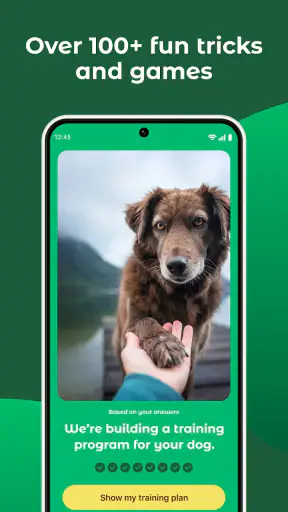
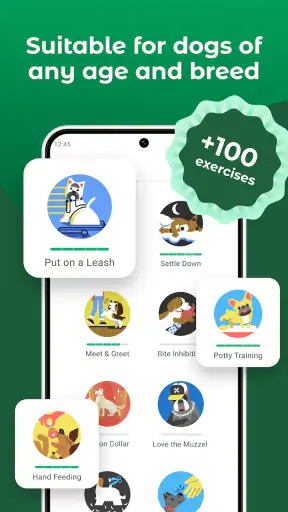
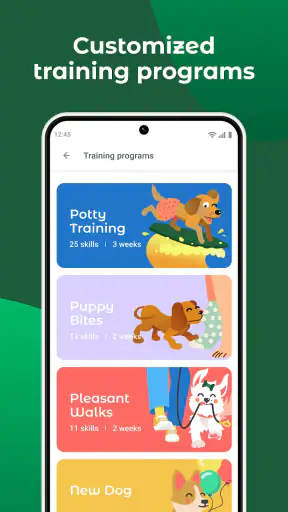
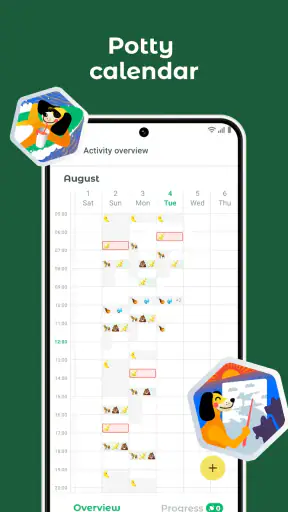
I approached Dogo as a practical tool for the moments when dog training needs more structure than a quick command repeated in the kitchen. It is an education app from Dogo, aimed at dog owners who want guided exercises, playful practice, and a clearer routine for working with a puppy or adult dog. The app is free to install, rated for Everyone, and its large community presence—over five million installs, with an average score of 4.6 from roughly 129 thousand ratings—suggests that it has become a familiar option rather than a niche experiment.
My first impression is that Dogo works best when I treat it as a training companion, not as a replacement for patience, observation, or professional help. The useful question is not whether it can magically teach a dog a behavior. The better question is whether it can help me turn good intentions into short, repeatable sessions. In that role, it has a lot going for it, especially for people who are unsure what to teach next or who lose consistency after the first enthusiastic week.
From an unstructured problem to a workable training routine
The starting condition for many owners is familiar: the dog knows a few things, but the household does not have a shared plan. One person asks for a sit before dinner, another rewards jumping, and the dog receives mixed signals. With a puppy, the problem may be even more basic. I may want to work on attention, manners, and everyday cooperation, yet feel overwhelmed by conflicting advice from videos, social media, and well-meaning friends.
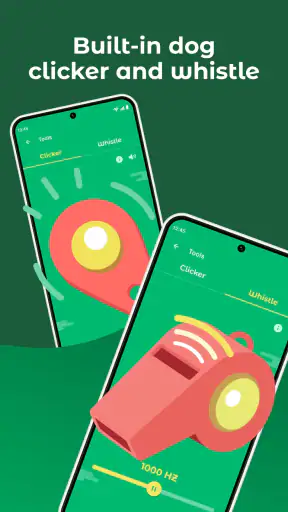
Dogo gives that situation a more defined starting point. Instead of opening a general video platform and guessing which lesson applies, I can use a dog-focused learning environment built around training and play. The store summary highlights games for dogs, puppy playtime, a dog whistle, and a clicker, so the app’s identity is broader than a simple command dictionary. It tries to connect instruction with the tools and small activities that make practice easier to repeat.
That matters because dog training is often lost between knowing what to do and doing it at the right moment. A written article may explain a behavior beautifully, but it does not necessarily help me begin a session after work, when my dog is excited and I have only a few minutes. Dogo’s strongest promise is organizational: it places training ideas in one dog-specific space and makes the next action feel less abstract.
I would particularly recommend starting with one household goal rather than trying to explore everything at once. For example, if my dog jumps on visitors, I would not simultaneously attempt to overhaul walking, recall, feeding manners, and every trick. I would choose the visitor problem, prepare rewards, and use the app to support a small practice routine. This is an important insight: the app can supply direction, but progress still depends on limiting the number of behaviors being trained at the same time.
Choosing the right starting point for the dog in front of me
A puppy that has just arrived home should not be approached in exactly the same way as an adult dog with years of established habits. Age, energy, fear, motivation, and the environment all affect the session. Dogo is most useful when I use its material as a menu and then filter it through those realities. A short, easy exercise may be more valuable than an ambitious lesson if the dog is tired, distracted, or still learning to focus on me.
For a new owner, the app can reduce the intimidating feeling that every training session must be impressive. I can begin with a quiet room, a few rewards, and one simple objective. For an experienced owner, the value is different: Dogo can provide fresh structure when familiar routines have become stale. It is less compelling for someone who already follows a detailed plan with a trainer and only needs highly specialized behavior work.
The free entry point also makes it easier to test whether the teaching style suits both dog and owner before committing to a longer routine. However, the presence of in-app purchases, ranging from small amounts to substantially higher-priced items, means I would pay attention to what is included before treating the app as a complete long-term solution. Free installation does not automatically mean every useful part of the experience is free.
How I would run a session from preparation to reward
My preferred workflow begins before opening the lesson. I would choose a low-distraction location, keep rewards ready, and decide what success looks like in that session. If the target is calm attention, success might be the dog looking toward me for a moment. If the target is a command, success might be one clean response rather than a perfect performance repeated many times.
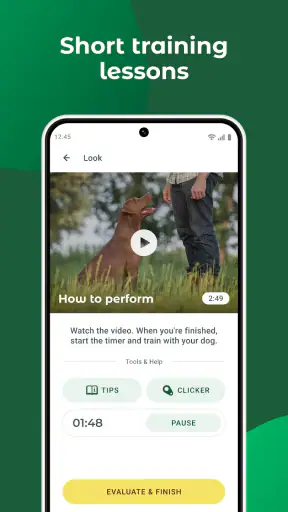
Then I would use the app’s guidance to understand the exercise, rather than staring at the screen while the dog waits. This is where a phone-based trainer has an unavoidable handoff: information starts on the display, but the real work happens between human, dog, voice, gesture, timing, and reward. I need to read the instruction first, put the phone somewhere safe, and give the dog my full attention. The app can explain the exercise, but it cannot watch my timing or notice that my dog is becoming frustrated.
The clicker and whistle references are potentially useful because they give owners a way to think about precise communication. A clicker can mark the instant a dog does something desirable, while a whistle can carry farther than a voice in suitable situations. I would not use either automatically. A sound is only helpful when the dog understands what it predicts and when I can use it consistently. Introducing a clicker without pairing it thoughtfully with rewards may create noise without meaning; using a whistle as a substitute for training can create false confidence.
One of the more practical ways to use the app is as a session planner rather than a passive library. I would select an exercise, identify the first tiny step, practice it several times, and stop while the dog is still engaged. Afterward, I would note what caused difficulty: the room, the reward, my timing, the dog’s energy, or the distance from the distraction. That small reflection is an advanced habit that a generic command video rarely encourages, and it helps prevent me from blaming the dog for a setup that was simply too difficult.
A realistic evening example
Imagine I have a young dog who becomes overexcited when someone comes through the front door. I have ten minutes before dinner and no trainer beside me. I could open Dogo, review a suitable exercise, and decide that the first step is not greeting a real visitor at all. I might practice standing near the door while rewarding the dog for keeping four paws on the floor, then gradually add movement or a quiet knock if the dog remains successful.
The handoff here is important. The app provides the idea and sequence; I control the environment; another person may act as the visitor; and the dog supplies feedback through body language. If the dog starts barking, lunging, or ignoring rewards, I would lower the difficulty instead of pushing through the lesson. The result of that evening should not be “the dog is cured.” A realistic result is that I learn which step is manageable and the dog experiences a few successful repetitions.
That approach also shows where Dogo can be more useful than searching randomly online. A general search may produce dozens of contradictory techniques, with different assumptions about equipment, timing, and the dog’s history. A focused app can make the first move easier. The trade-off is that a guided sequence may feel less flexible than advice from a trainer who has physically observed the dog and adjusted the plan in real time.
Keeping the household aligned
Training does not belong only to the person holding the phone. If several people live with the dog, the outcome depends on handoffs between them. I would explain the chosen cue, the reward timing, and the behavior we are trying to reinforce. Everyone should know what to do when the dog succeeds and what to do when the dog fails. Otherwise, one careful session can be undone by an inconsistent response later.
This is one place where an app can help indirectly but cannot solve the human problem. Dogo may give me a shared reference point, yet I still need to communicate with family members. I would avoid changing the verbal cue every day, rewarding different responses for the same exercise, or allowing visitors to rehearse the unwanted behavior. The app is a useful handoff between information and action, but it is not a substitute for agreement inside the home.
The same principle applies when a dog spends time with a sitter, walker, or another household. I would pass along only the routine we are actually using, including the level of difficulty that the dog can handle. Sending someone a broad list of commands is less useful than saying, “Ask for this behavior in this quiet setting, reward immediately, and stop if the dog becomes overwhelmed.” The clearer the handoff, the less likely the dog is to receive confusing instructions.
What a good outcome looks like
After several consistent sessions, the result I would look for is not a dramatic trick performed on demand. I would look for a dog that understands a particular cue more reliably, recovers faster from excitement, or can practice in one additional location. Those changes are modest, but they are meaningful because they transfer into ordinary life.
Dogo is especially well suited to owners who need momentum. The app can make it easier to fill a spare moment with purposeful practice instead of waiting for a perfect weekend. Its education category is a good fit for that learning mindset: I am not merely entertaining the dog, and I am not simply collecting commands. I am building a shared vocabulary through repetition.
Another useful outcome is improved owner timing. Many people know that they should reward good behavior but do so too late. Working through structured exercises can make me more aware of the exact moment I am reinforcing. That benefit belongs to the human learner as much as to the dog. If I become better at noticing calm behavior before it disappears, I may improve daily interactions even when the phone is not open.
Still, I would measure progress against the dog’s starting point, not against polished demonstrations. A fearful rescue dog, a highly reactive dog, or an animal with pain may need a different pace and possibly in-person assessment. Dogo can support basic learning, but a digital lesson cannot examine movement, diagnose discomfort, or safely manage a serious aggression concern. In those cases, a qualified behavior professional is the better primary option.
Where the workflow becomes frustrating
The first friction is screen dependence. A phone is convenient for opening a lesson, but it is awkward during active training. I do not want to hold it while managing rewards, a leash, a door, or a dog that suddenly moves. The solution is simple but easy to overlook: prepare the lesson, place the phone out of reach, and treat the screen as a reference rather than the center of the session.
The second limitation is that guided content can encourage owners to follow steps too literally. Dogs are not identical, and a sequence that works in a quiet room may fail in a hallway, garden, or busy street. I would adjust distance, duration, and distraction level instead of assuming the dog has forgotten everything. If the app’s progression feels too fast, repeating an easier stage is not failure; it is better training.
There is also a practical cost question. Dogo is free to download, but optional purchases sit between around half a dollar and nearly three hundred dollars per item. That is a wide range, so I would review the purchase screen carefully and decide whether the free experience already covers my needs. Owners looking for a completely free, no-upgrade training reference may prefer library books, community classes, or carefully chosen videos, even though those alternatives usually offer less unified structure.
The app may also be the wrong choice for someone who wants immediate, personalized diagnosis. If my dog is guarding food, panicking when left alone, snapping at people, or showing a sudden behavior change, I would not rely on an app workflow as the only response. The right next step may involve a veterinarian or a behavior specialist. Dogo is strongest for everyday education and practice, not urgent or complex cases.
How it compares with familiar alternatives
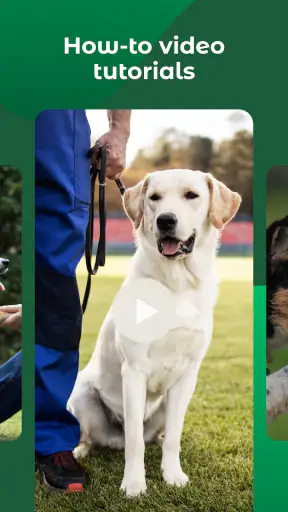
Compared with random online videos, Dogo offers a more concentrated dog-training context. I spend less time sorting through unrelated advice and more time moving toward an exercise. The downside is that a video from a respected trainer may provide richer demonstrations of body language, common mistakes, and difficult variations. If visual detail is my main need, video can be the better supplement.
Compared with a printed book, the app is easier to carry into a short daily routine and may feel more approachable when I want an immediate activity. A book can be better for understanding principles, troubleshooting, and reading at my own pace without notifications or purchase prompts. I would choose print for deep background and Dogo for a convenient practice entry point.
Compared with an in-person class, Dogo is more private and flexible. I can work around my schedule and avoid taking a nervous dog straight into a busy group setting. A class, however, provides controlled distractions, feedback from a human instructor, and opportunities to learn how my dog behaves around others. For socialization or serious challenges, that real-world supervision is difficult for an app to match.
Who should try it and who should skip it
I think Dogo is a good fit for a first-time puppy owner who wants a clear place to begin, an adult-dog owner rebuilding basic habits, or a busy person who benefits from short, guided sessions. It is also useful for households that need a common training vocabulary and for owners who enjoy learning through small exercises rather than reading a long manual before taking action.
I would be more cautious if I already have a detailed plan from a trainer, need breed-specific working instruction, or expect the app to evaluate my technique. I would also skip making it the main solution for dangerous behavior, severe anxiety, or sudden changes that may have a medical cause. In those situations, the convenience of a phone should not outweigh the need for direct expertise.
The technical entry point is broad: the current version is 10.45.0, and it supports Android 7.0 or later. That makes it accessible to owners who are not using a recent phone. The age rating is Everyone, which fits a family-oriented training app, although adults should still guide children so that rewards, equipment, and dog handling remain safe and consistent.
My final take after following the full workflow
Dogo succeeds when I use it to close the gap between “I should train my dog” and “I know what we are doing for the next few minutes.” Its value comes from structure, approachable practice, and the way it brings training-related activities into one place. The developer, Dogo, has created an app that feels most useful as a daily prompt and learning aid rather than as a magic behavior fixer.
I would start with the free installation, choose one ordinary household problem, prepare the environment before opening the lesson, and keep the first sessions short enough to end on success. I would also watch the purchase options, avoid treating every exercise as a rigid recipe, and bring in a qualified professional when the behavior is risky, distressing, or unusually complex.
My recommendation is positive, with realistic expectations. If you want a friendly structure for puppy playtime and basic dog education, Dogo is worth trying. If you need diagnosis, hands-on feedback, or a fully individualized behavior plan, use it only as a supporting resource and choose a trainer, class, or veterinary professional as the main guide.


